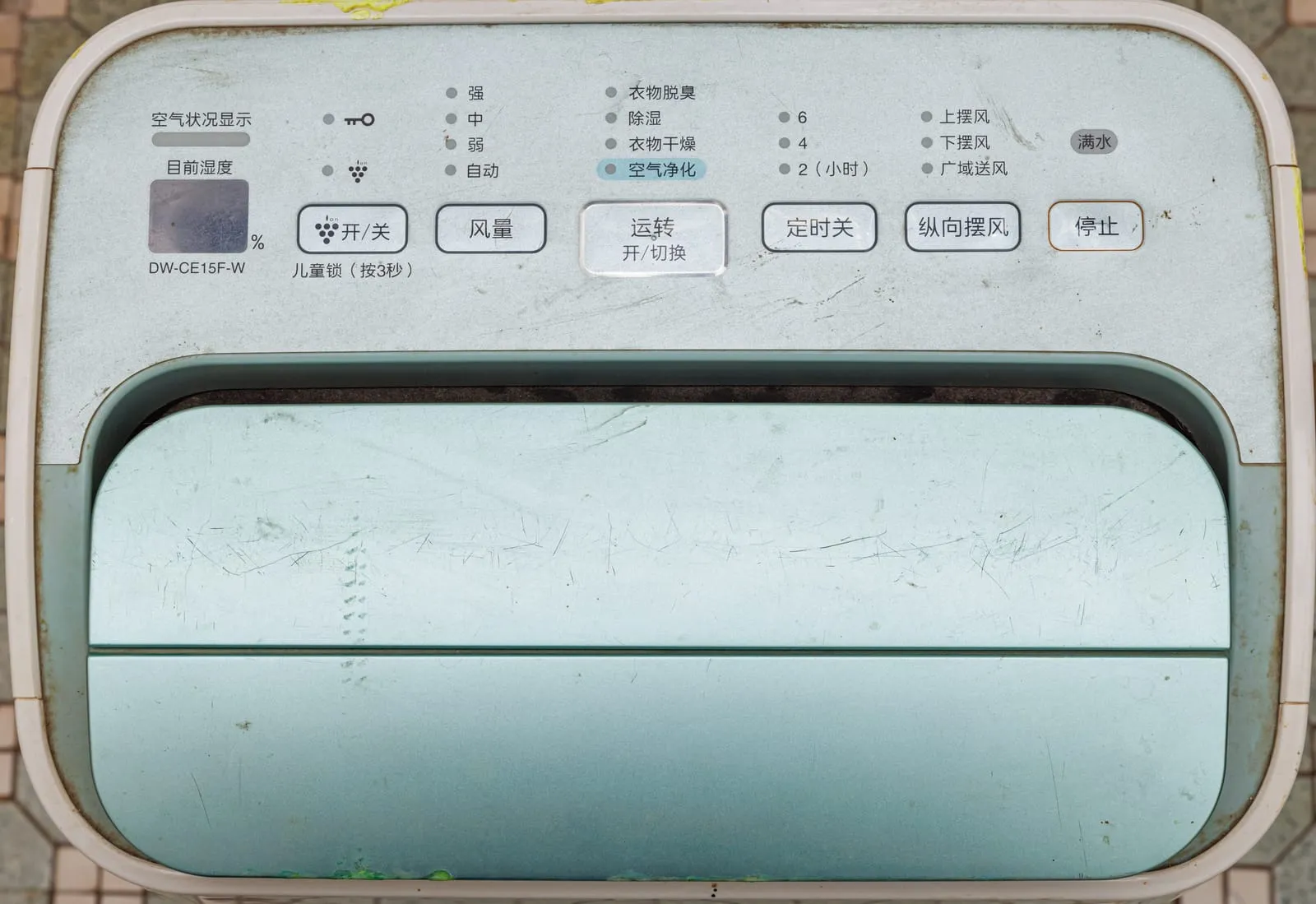

Quick answer: a 50-pint ENERGY STAR dehumidifier with a hose or pump drain handles a damp room or small house; a ducted whole-home unit is the long-term answer if every room feels sticky. Aim for the EPA’s 30 to 50 percent humidity range.
The EPA’s advice for preventing mold is to keep indoor humidity below 60 percent and ideally between 30 and 50 percent [1]. Water problems compound it: the Harris County Flood Control District says a major flood occurs somewhere in the county about every two years [2], and after any flood or leak, the CDC says to dry the home within 24 to 48 hours if you can [3].
At a glance
- EPA indoor humidity target
- Below 60%, ideally 30% to 50% [1]
- Dry wet materials within
- 24 to 48 hours [1][3]
- Mold patch bigger than
- 10 sq ft: more than a DIY job, per EPA [1]
- Major floods in Harris County
- About every two years [2]
- ENERGY STAR savings
- About 20% less energy than similar standard models [4]
How we chose
- ENERGY STAR certified. Every pick is on the EPA’s ENERGY STAR list, where makers report tested capacity (pints per day), efficiency and yearly energy use [4][5]. We use those tested numbers instead of box claims.
- A drain option, because emptying a bucket twice a day in August isn’t realistic. Each pick has a hose connection or a pump.
- Recall check. Dehumidifiers have had several large fire recalls, including Midea-made and Gree-made units sold under many brands. We checked every model number below against CPSC recalls on November 2, 2026, and none matched [6].
Our picks
Best for: A damp main floor or open living area
Midea Cube 50-Pint Dehumidifier (MAD50S1QWT-A)
Tested at nearly 50 pints a day with an efficient rating. Drains continuously through the included hose to a sink or floor drain.
- 49.67 pints/day, tested (ENERGY STAR) [5]
- Efficiency 2.01 L/kWh; about 515 kWh a year [5]
- Continuous drain hose included; no built-in pump [7]
- App control, per Midea [7]
Safety check: ENERGY STAR certified. No CPSC recall found for this model number (checked 2026-11-02).
Watch out: No pump, so the hose has to run downhill to a drain. Midea's own page lists both 4,500 and 1,500 square feet for coverage; size by ENERGY STAR's pints-per-day guide instead.
See it on Amazon → We chose it from specs and safety records; we haven't tested it ourselves.
Best for: Rooms with no floor drain
Frigidaire 50-Pint Dehumidifier with Built-In Pump (FHDP5033Y1)
The built-in pump pushes water up and out to a sink or a window, so it can run unattended in a room where a gravity hose won't work.
- 49.95 pints/day, tested (ENERGY STAR) [5]
- Efficiency 2.01 L/kWh; about 520 kWh a year [5]
- Built-in pump; 1.9-gallon bucket with auto shutoff [8]
- Humidity settings 35% to 85% [8]
- Wi-Fi with app control, per Frigidaire [8]
Safety check: ENERGY STAR certified. No CPSC recall found for this model number (checked 2026-11-02); older Frigidaire models were part of Gree and Midea recalls, so check the model number if you're buying used.
Watch out: Pumps add a part that can fail. Frigidaire's page lists one year of labor coverage.
See it on Amazon → We chose it from specs and safety records; we haven't tested it ourselves.
Best for: A bedroom, closet or small apartment
Midea 35-Pint Dehumidifier (MAD35S1QWT-A)
Smaller and lighter on power than the 50-pint models, with the same tested efficiency rating.
- 35.82 pints/day, tested (ENERGY STAR) [5]
- Efficiency 2.01 L/kWh; about 378 kWh a year [5]
Safety check: ENERGY STAR certified. No CPSC recall found for this model number (checked 2026-11-02).
Watch out: For a very damp space, ENERGY STAR suggests more capacity, so this is for one room, not a whole floor [4].
See it on Amazon → We chose it from specs and safety records; we haven't tested it ourselves.
Best for: Whole houses that stay sticky all summer
AprilAire E080 Whole-Home Dehumidifier
Ducted into your HVAC system, it treats the whole house instead of one room, with no bucket. It meets ENERGY STAR's Most Efficient criteria.
- 65 pints/day, tested (ENERGY STAR) [5]
- Efficiency 2.35 L/kWh; about 632 kWh a year [5]
- Up to 4,400 sq ft, per AprilAire [9]
- Drains to a floor drain or hose; washable MERV 8 filter [9]
Safety check: ENERGY STAR Most Efficient. No CPSC recall found for the E080; a 2023 recall of AprilAire maker Research Products covered steam humidifiers, not this unit (checked 2026-11-02).
Watch out: Needs ductwork and usually an HVAC contractor, so installed cost is far higher than a portable unit.
See it on Amazon → We chose it from specs and safety records; we haven't tested it ourselves.
Buying guide
- Measure first. Put a hygrometer in the room for a few days. If it reads over 60 percent, act [1].
- Size by dampness. ENERGY STAR suggests 30 to 50 pints a day for wet spaces under 2,000 square feet, and 50 or more above that [4].
- Plan the drain. A hose needs a downhill path to a drain; a pump can push water up to a sink or window.
- Close the room. ENERGY STAR says to keep doors and windows shut while it runs, and to keep units without top discharge away from walls [4].
- Set it, don’t max it. 45 to 50 percent keeps you inside the EPA’s range without running nonstop [1].
Sources
- U.S. EPA: A Brief Guide to Mold, Moisture and Your Home
- Harris County Flood Control District: Hurricane Harvey
- CDC: Mold cleanup after disasters
- ENERGY STAR: Dehumidifiers
- ENERGY STAR: Certified Dehumidifiers data set
- U.S. Consumer Product Safety Commission: Recalls database
- Midea: 50 Pint Cube Dehumidifier
- Frigidaire: FHDP5033Y1 50-pint dehumidifier
- AprilAire: E080 80 Pint Dehumidifier
Common questions
What humidity should I keep my Houston house at?
The EPA says to keep indoor relative humidity below 60 percent, ideally between 30 and 50 percent. A hygrometer, which the EPA says costs about $10 to $50, tells you where you are.
What size dehumidifier do I need?
ENERGY STAR suggests 30 to 50 pints a day for a wet space under 2,000 square feet and 50 pints or more for wet spaces over 2,000. It also says it's better to oversize than undersize.
Can I just run my air conditioner instead?
The EPA's advice is to use air conditioners and dehumidifiers when needed. If a hygrometer shows humidity above 60 percent with the AC running, add a dehumidifier.